
General Ways of High Pressing in a 4-3-3
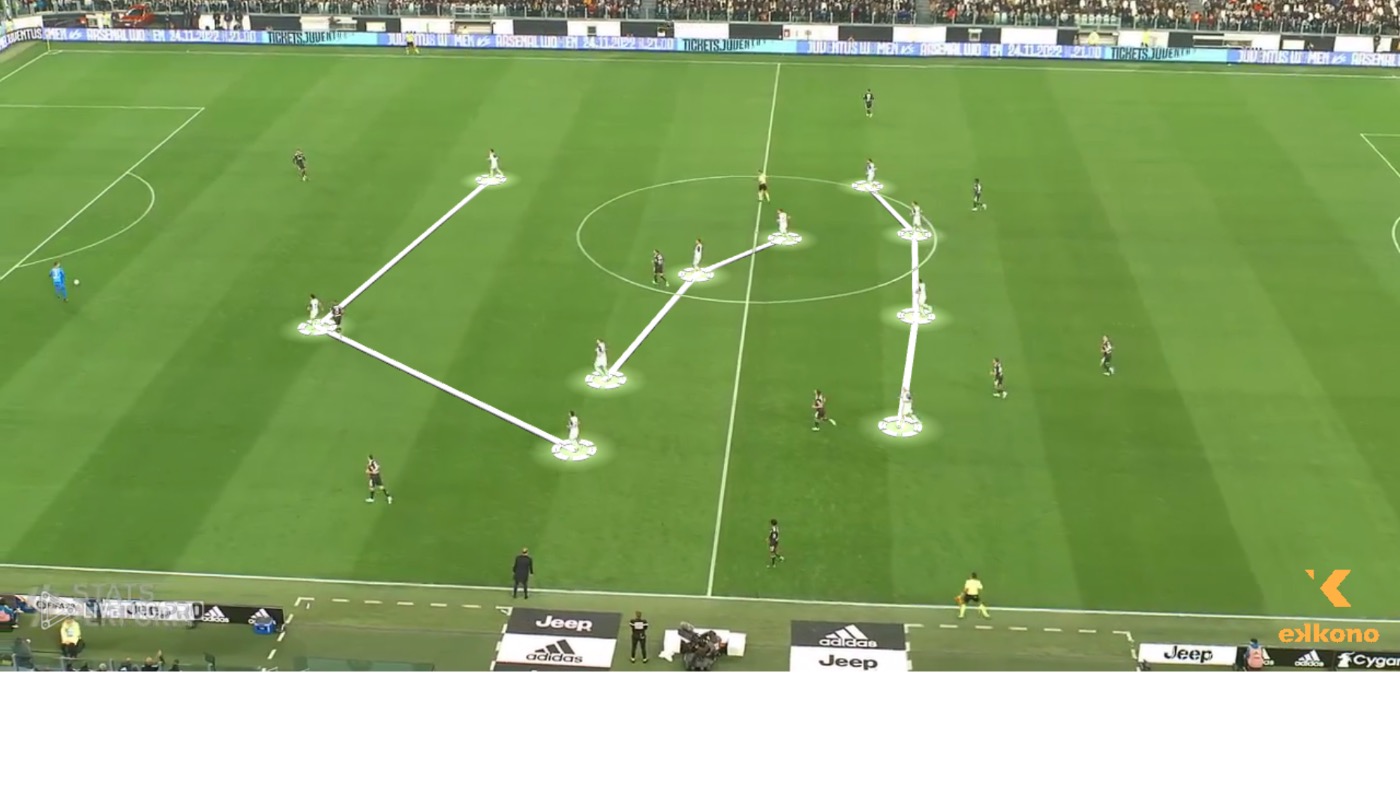
There are different general ways of high pressing in a 4-3-3. The main difference is not only where the team wants to press. It is also about which player jumps to press the opponent’s center back and how the rest of the team adjusts behind that jump.
All these solutions can be useful. The question is not which one is always better. The key question is which one fits your players and the way the opponent wants to build up.
In this article, we will analyze three main ways of jumping to press: pressing from inside, pressing from outside, and pressing while protecting inside. Each option creates different advantages and disadvantages. These depend on the player profiles, the distances between players, the opponent’s structure, and whether the opponent likes to switch play or progress through the ground.
To understand these pressing solutions in a broader tactical context, you can also read our article ‘The 4-3-3 formation: How to adapt it against other systems‘, where we explain how the 4-3-3 can be modified against structures such as the 4-2-3-1 and the 3-5-2.
Both articles are connected to the ideas developed in our Advanced Team Fundamentals II – Systems course, where we analyze how to adapt your game model to different systems such as 4-3-3, 3-5-2, 3-4-3, 4-4-2 flat, 4-4-2 diamond, and 4-2-3-1.
High Pressing from Inside
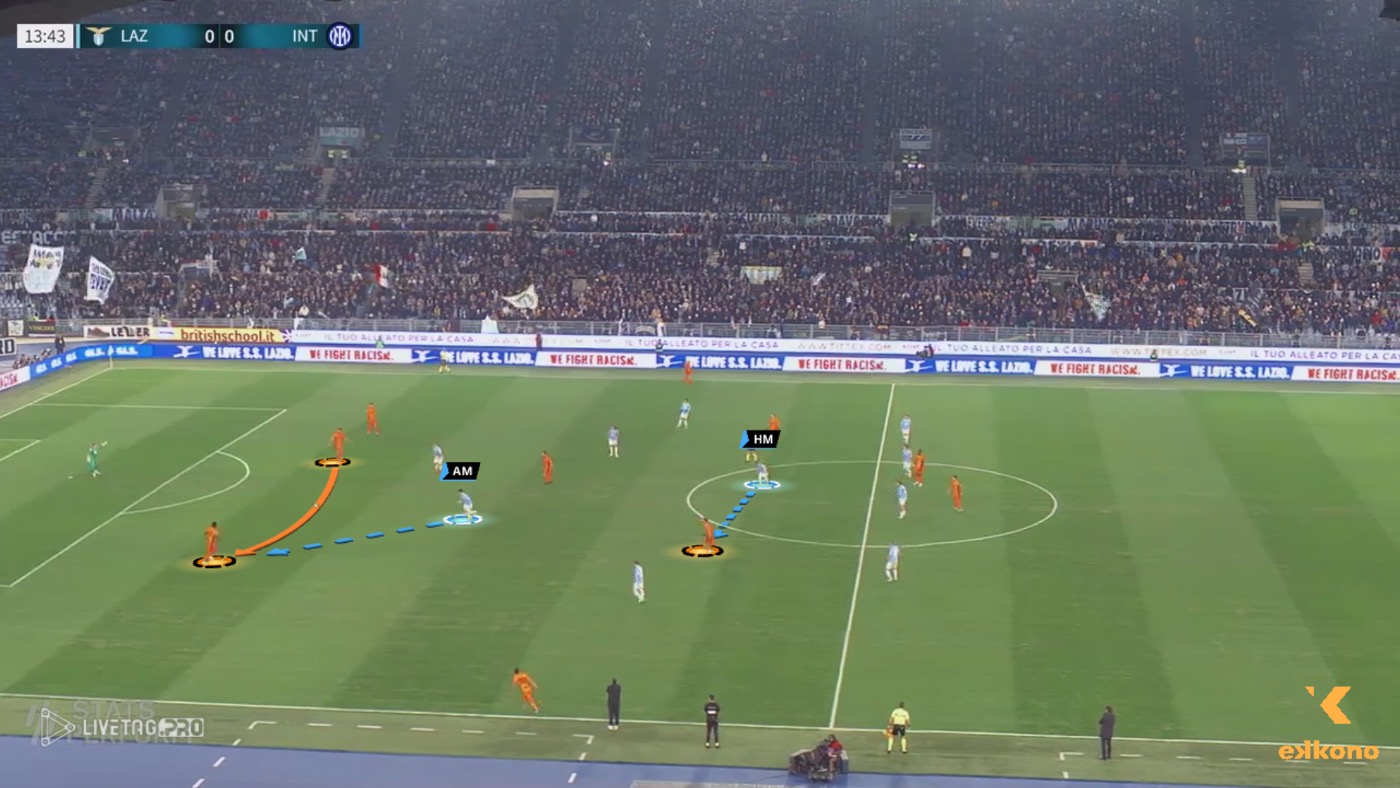
The first option is high pressing from inside. In this situation, the attacking midfielder jumps to press the center back. Behind the jump, the holding midfielder adjusts their position to stay between players or mark the player left by the attacking midfielder.
This way of pressing can help protect the winger. Instead of asking the winger to jump forward and recover a long distance, the team keeps them in a more balanced position. This can be useful when the winger is strong in attack but does not have the profile to make repeated long defensive runs.
One advantage is clear: the team can block one side without exposing the winger too much. If the opponent switches play, the player who jumped from inside may still arrive, especially if they can cover that distance. The opposite winger also has to help block and keep the team balanced.
However, this option depends on the midfielders’ profile. The player who adjusts behind the jump must cover the player left free and help the team keep the block narrow. If the midfielders cannot run, adjust, and defend those spaces, the press becomes difficult to sustain.
High Pressing from Inside
The attacking midfielder jumps to press the center back, while the holding midfielder adjusts behind the press to cover the player left free.
High Pressing from Outside
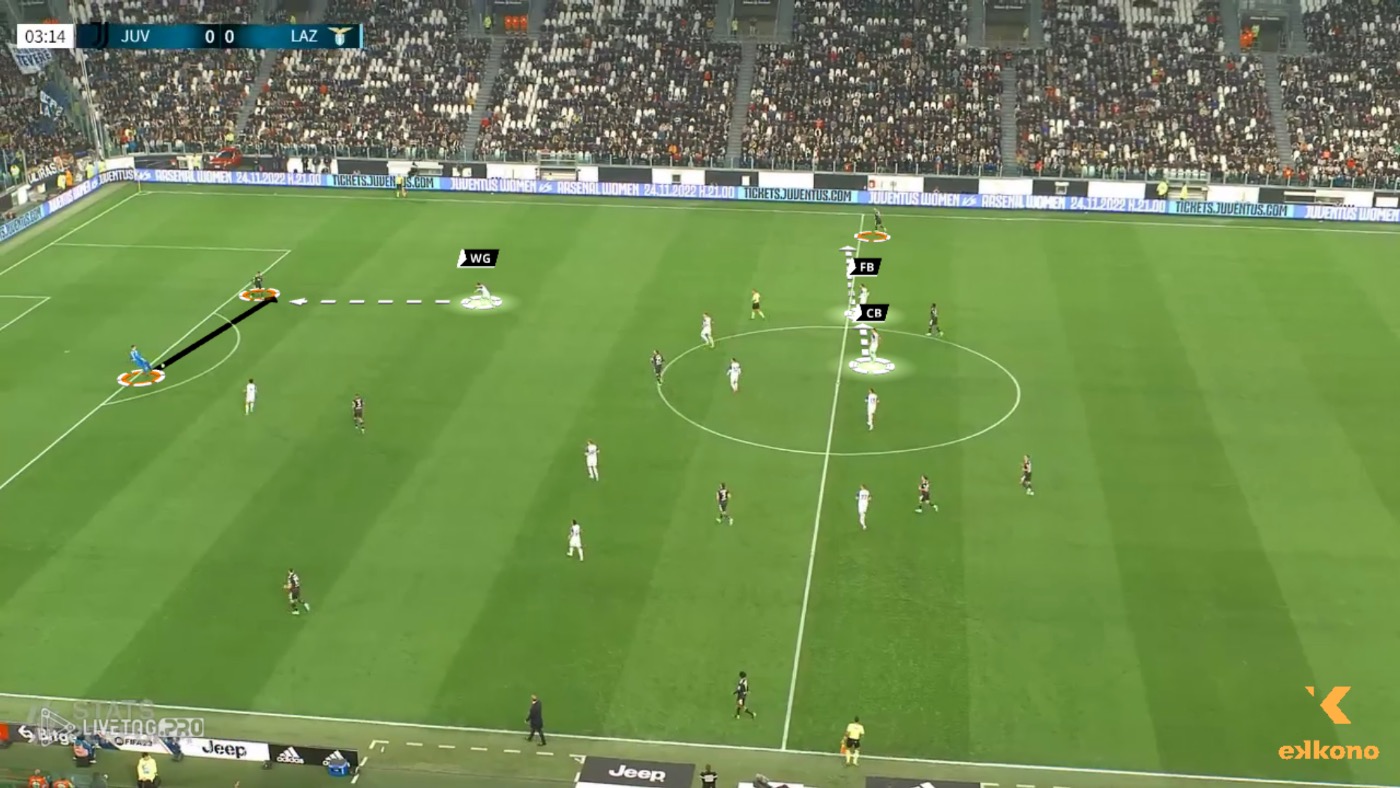
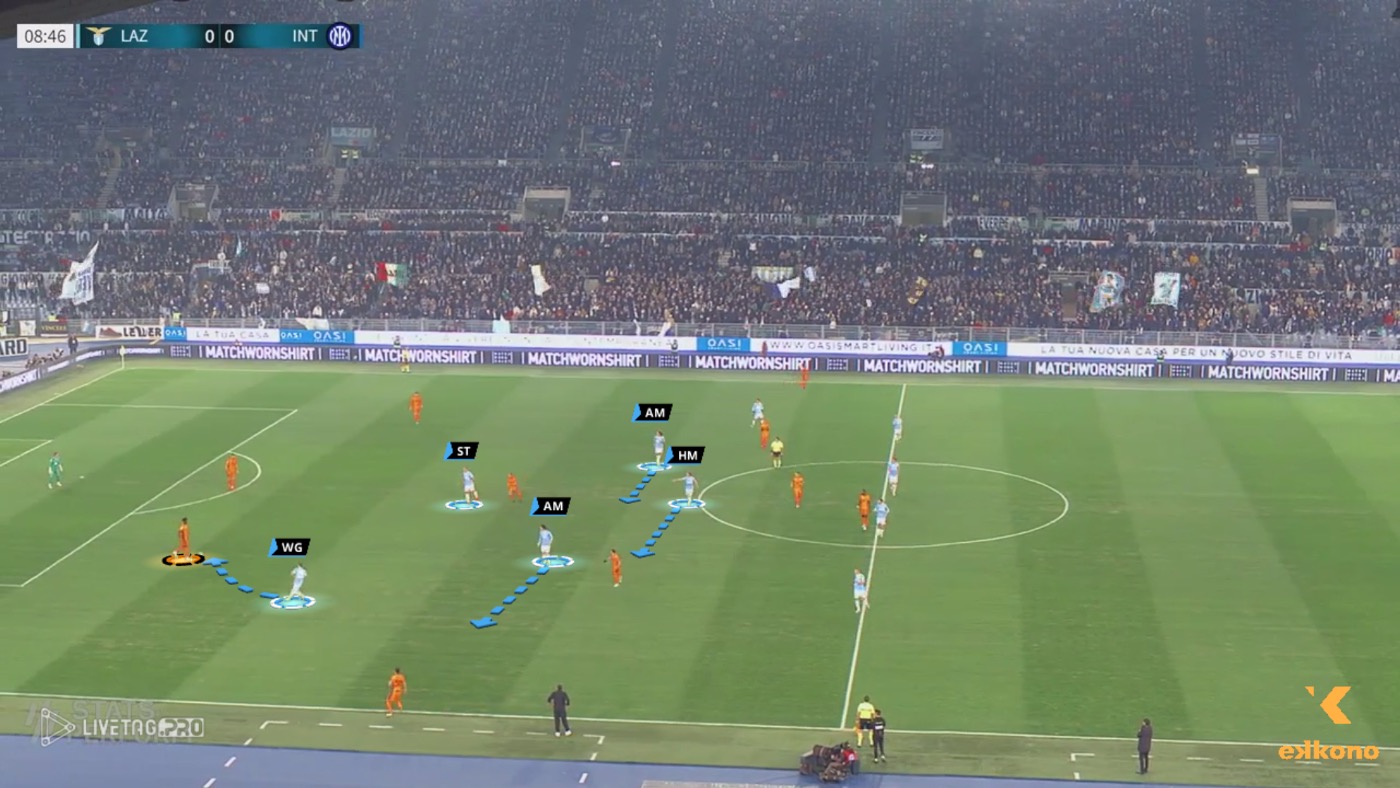
The second option is high pressing from outside. Here, the winger jumps to press the center back. When the winger jumps, the fullback adjusts their position and marks the player left by the winger.
This solution can be useful when the opponent’s center backs are positioned wide. If the center back receives in a wide position, the winger has a shorter jump than an inside player. As a result, the team can keep the block narrow because the pressing distance is shorter.
Pressing from outside can also help against teams that like to switch play. When the opponent moves the ball from one side to the other, the opposite winger can prepare to jump and challenge the next action. This can make it harder for the opponent to use switches to escape the press.
The risk appears when the team does not protect the inside spaces well. If the fullback does not control the player left by the winger, the opponent can play through the gap. From there, they can progress and create a dangerous situation. For that reason, this solution requires good timing from the fullback and strong coordination between the winger, the fullback, and the midfield line.
High Pressing from Outside I
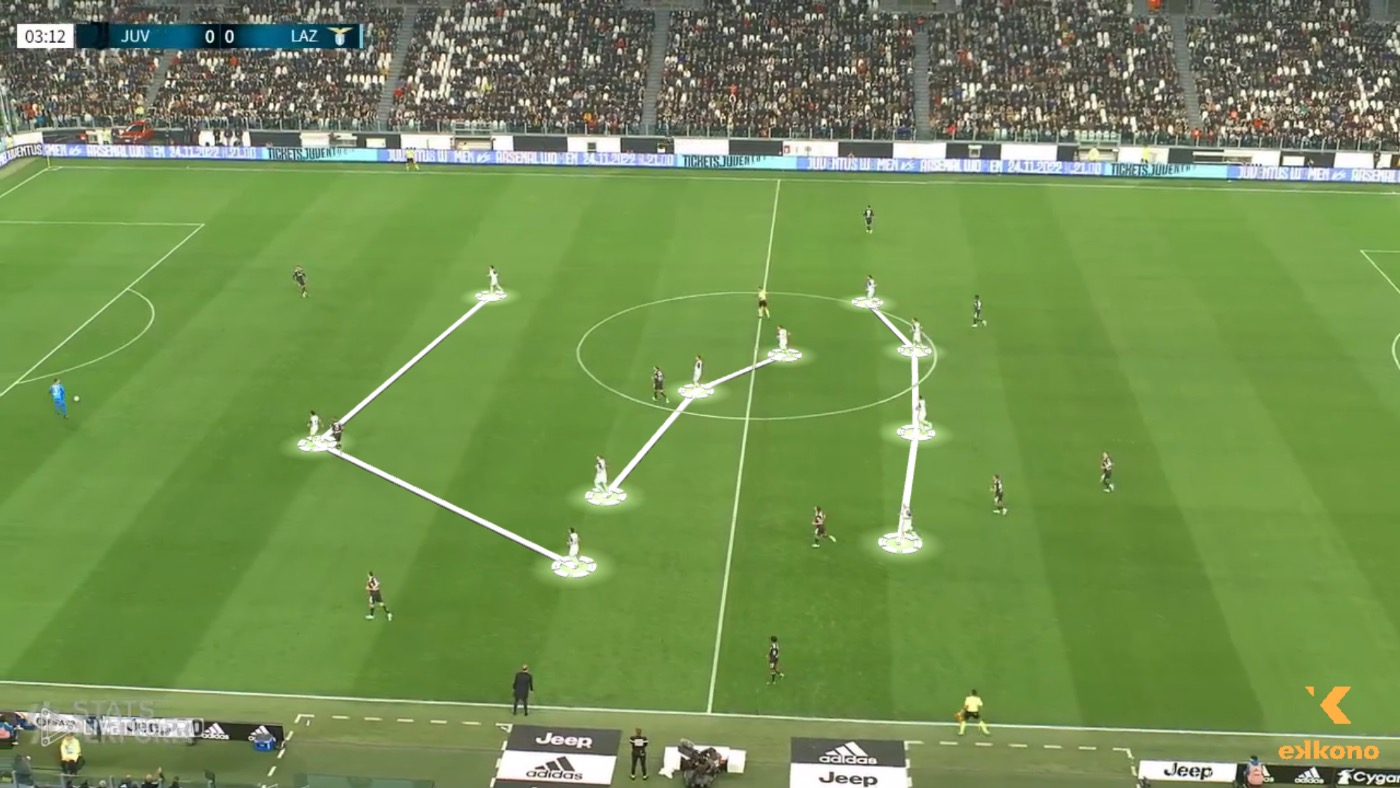
Lazio are positioned in their 4-3-3 structure before the winger jumps to press the center back.
High Pressing from Outside II
The winger jumps to press the center back, while the full back and center back adjust their positions behind.
“HIGH PRESSING IS ABOUT DECIDING WHO JUMPS, WHO ADJUSTS, HOW THE TEAM PROTECTS THE PLAYER LEFT FREE, AND WHEN THE TEAM SHOULD STOP PRESSING TO RECOVER THE BLOCK”
High Pressing Protecting Inside
The third option is high pressing while protecting inside. In this situation, the strikers keep a central position, while the team protects the inside first. Then, one player can jump toward the side to press without leaving the central spaces too exposed.
This option gives the team more balance. The team may not be as ready to jump in the opposite corridor, but it protects the inside spaces better. It may challenge less immediately, but it keeps more compactness.
This connects with an important principle: keeping the block narrow. To do that, the team needs short jumps. If the opponent’s center backs are wide, the winger may have the shorter jump. If the center backs are narrow, jumping with the number ten may be a better solution.
Another important detail is what happens after the opponent switches play. When a team presses on one side and the opponent switches, the team should not always jump again immediately. In most situations, the team should first recover the block. Jumping again before the team is organized can become one of the biggest mistakes in high pressing.
High Pressing from Outside
The striker stays central while the winger presses the center back, with the midfield line sliding across to protect inside spaces.
Which High Pressing Solution Should You Use?
The three general ways of high pressing can all be effective. Pressing from inside, pressing from outside, and protecting inside are not fixed answers. Coaches should select them depending on two main questions.
First, which players do you have? If your winger is not prepared to make repeated long defensive runs, pressing from inside may help protect them. If your winger and fullback can coordinate well and cover the necessary distances, pressing from outside can work well. If your team needs more balance and central protection, protecting inside may be the best solution.
Second, how does the opponent play? If the opponent’s center backs are wide, the winger may have the shorter jump. If the center backs are narrow, the attacking midfielder may have the shorter jump. Against teams that like to switch play, your team must defend those switches without losing compactness.
High pressing is not only about jumping forward. It is about deciding who jumps, who adjusts, how the team protects the player left free, and when the team should stop pressing to recover the block. This allows a team to press high with better structure and more balance.
Continue Learning: Advanced Team Fundamentals II – Systems
If you want to go deeper into these tactical decisions, the Advanced Team Fundamentals II – Systems course will help you understand how to adapt your team depending on both your structure and the opponent’s structure.
In the course, you will learn how the main systems in modern football work, including 4-3-3, 4-2-3-1, 4-4-2 flat, 4-4-2 diamond, 3-5-2, and 3-4-3. You will analyze their advantages, disadvantages, player profiles, structural variants, and key concepts in different game scenarios such as build-up, positional attack, and high pressing.
You will also learn the main considerations for selecting the best system for your team. This includes which player profiles fit each system better and how to modify your base system depending on the opponent’s structure.