
High pressing and its importance
The objective of high pressing is to prevent the opponent from comfortably organizing their build-up, recover the ball close to the opponent’s goal, and force mistakes through organized and consistent pressure.
To apply high pressing effectively, teams must recognize when and how to apply pressure. Without clear coordination, pressing can easily cause the team to become stretched, making it difficult to sustain both the physical and mental intensity required.
For this reason, high pressing must function as a collective structure. Players must coordinate their behavior around the ball, control the passing lines in the near space, and ensure the defense of the space behind the first line of pressure.
In this article, we will analyze three different types of high pressing: duel pressing, block pressing, and hybrid pressing, each with its own priorities and tactical implications.
High Pressing Through Individual Duels
In a duel-oriented pressing approach, the priority is to defend the ball possessor.
Players apply intense pressure on the ball carrier and defend with clear attacking player references around the ball. The objective is to challenge the opponent’s combinative play and force situations where the opponent must solve pressure through individual actions.
Because this model focuses more on players than on space, it requires a specific player profile. Defenders must be capable of handling a high number of duels and reacting quickly when the opponent attempts combinations such as one-twos.
When applying this approach, players must understand when to jump forward to press and how teammates provide balance behind the action. If the opponent manages to surpass the pressure, defending becomes more difficult because the focus on individual references can open larger spaces.
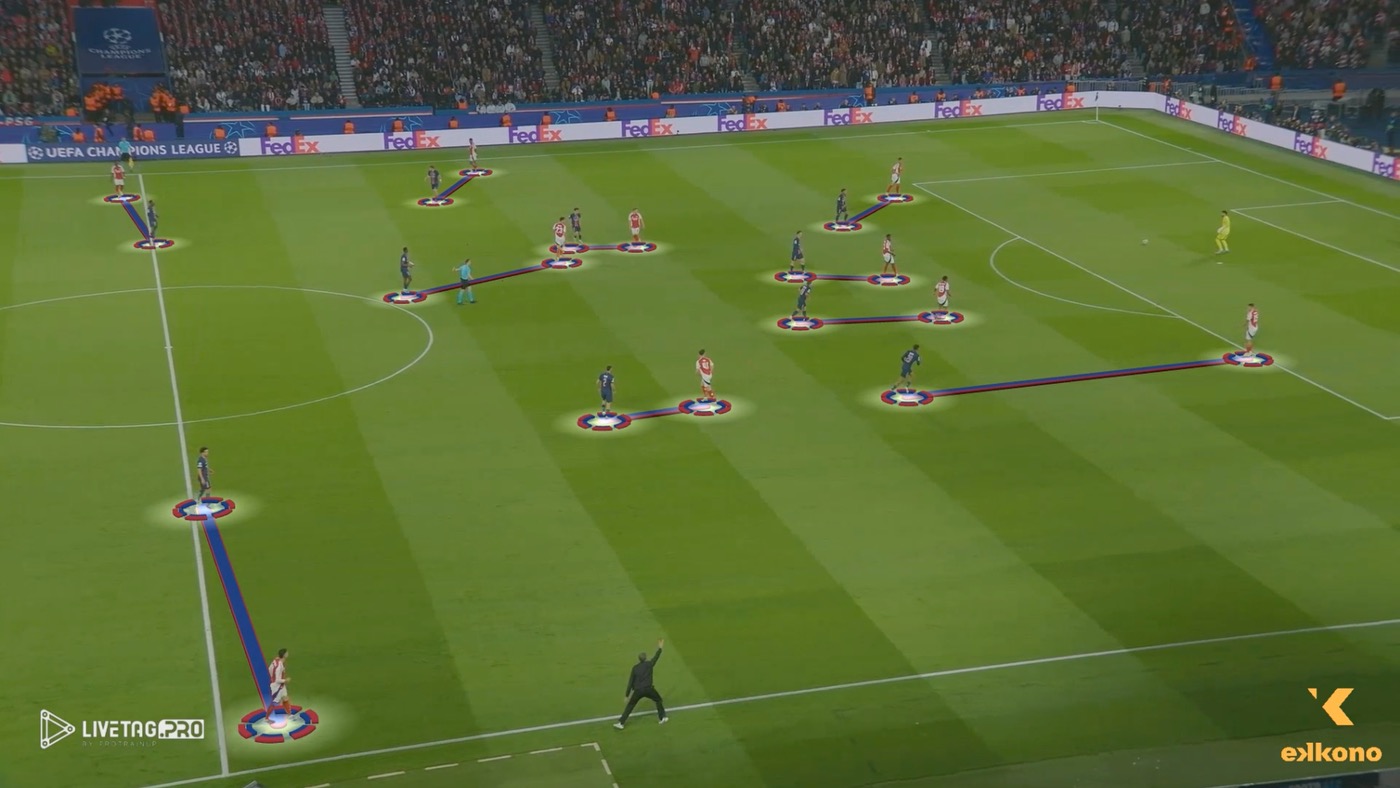
High Pressing: Duels
PSG applies a duel-oriented high press against Arsenal, with defenders stepping out to pressure their direct opponents across the pitch.
Structured High Pressing Block
In a high pressing block approach, the priority shifts to the team’s defensive structure.
Instead of immediately attacking the ball possessor, players focus on maintaining a compact collective shape and protecting key spaces. Defenders position themselves between opponents and the goal while cutting passing lines toward players behind the ball.
This structure allows players to provide cover for one another and maintain numerical superiority in deeper zones. When the opponent surpasses the first pressure, the team prioritizes rebuilding the defensive block to maintain balance and avoid defensive instability.
However, this approach may offer more progression opportunities to opponents with strong combinative capacity, as the focus is not on direct individual pressure. For this reason, it requires a high level of tactical understanding, with players constantly interpreting which spaces must be protected rather than relying on fixed individual references.
The key element of this approach is the protection of space. By maintaining compact distances and coordinated positioning, the team limits the opponent’s progression and reduces the risk of being exposed.
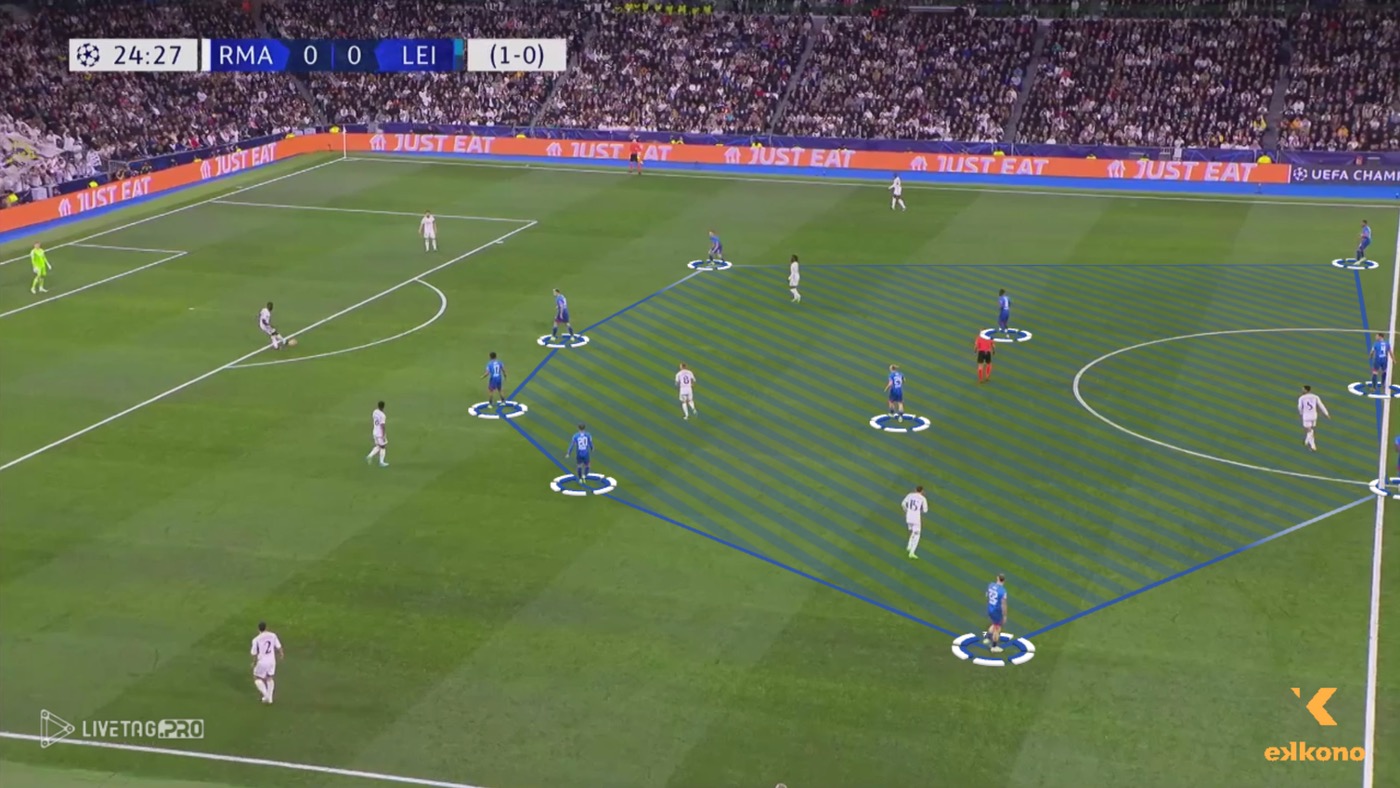
High Pressing: Block
RB Leipzig maintains a compact high pressing block against Real Madrid, protecting central spaces and avoiding Real playing inside.
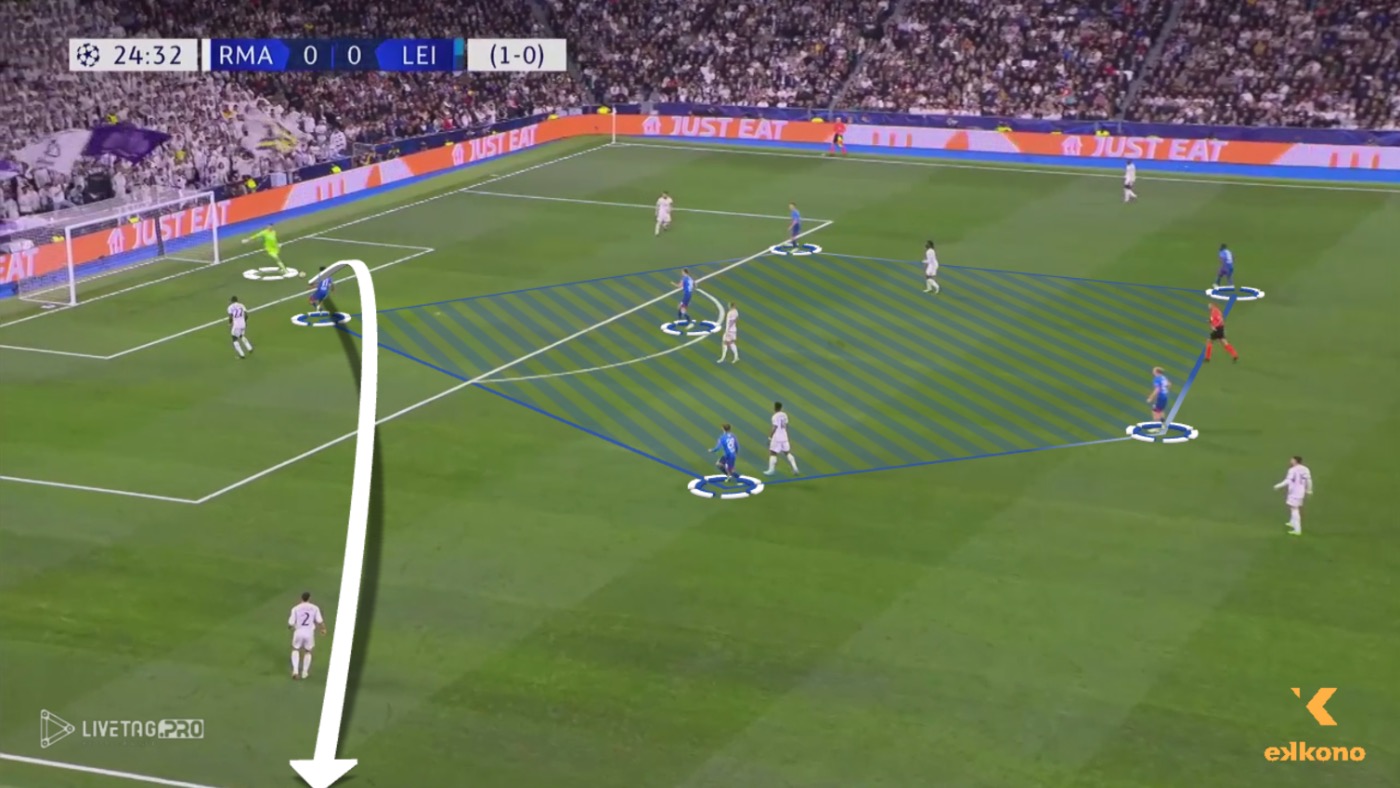
High Pressing: Block
After a backward pass to the goalkeeper, Leipzig steps higher to apply pressure, forcing Lunin to play long and concede possession.
“EFFECTIVE HIGH PRESSING COMBINES STRUCTURE, PRESSURE ON THE BALL AND CONTROL OF SPACE”
Hybrid High Pressing Approach
Hybrid pressing combines elements of both approaches.
The team initially prioritizes the collective defensive structure, maintaining compactness and protecting central spaces. However, once a specific sequence appears during the opponent’s build-up, players activate a more aggressive behavior and engage in duels around the ball.
In these moments, the team shifts from structural organization to intense pressure in the near spaces, attempting to recover the ball while maintaining balance behind the action.
An important element of hybrid pressing is preparing defensive solutions depending on how the opponent reacts to the pressure and the zones where the defending team guides the build-up.
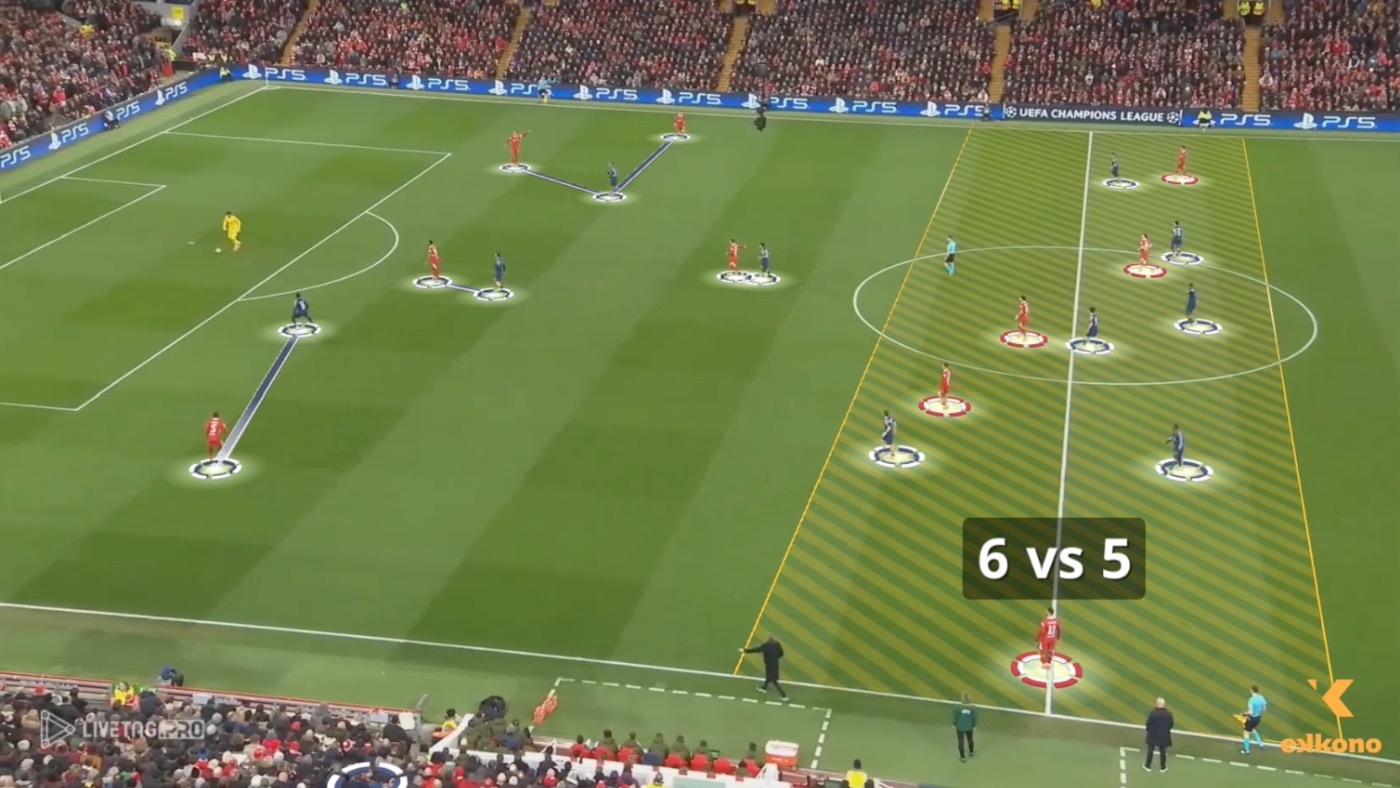
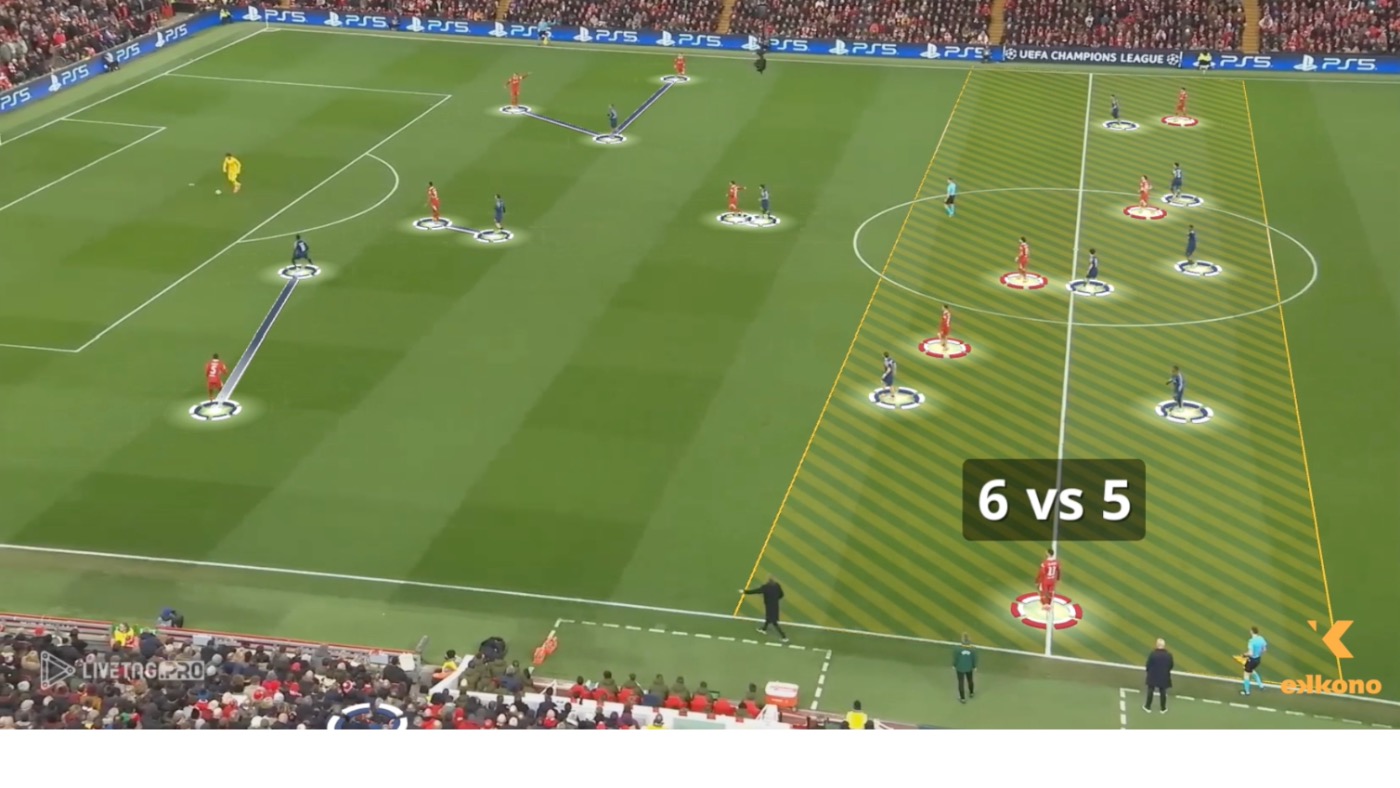
PSG – Hybrid Pressing
PSG applies a hybrid pressing approach against Liverpool, combining individual duels from most of the forward players with numerical superiority behind.
Conclusion
High pressing is a collective and strategic defensive tool that requires coordination, tactical understanding, and sustained intensity. Its effectiveness depends on recognizing the right moments to apply pressure while maintaining compactness and balance within the team.
Each model offers different advantages. Duel pressing prioritizes pressure on the ball possessor, block pressing emphasizes collective structure and space protection, and hybrid pressing combines both ideas by maintaining organization while activating duels in the right moments.
When applied correctly, high pressing allows a team to influence the opponent’s build-up, protect key spaces, and recover possession closer to the opponent’s goal, creating immediate opportunities to attack.