
Introduction
Marcelino is one of the best Spanish coaches of the last ten years and a specialist in developing a game model based on the 4-4-2 system.
According to Marcelino himself, the 4-4-2 provides both defensive and offensive balance, allowing for a rational occupation of space and facilitating constant collective support.
Compact Block Defense and Protection of Interior Spaces
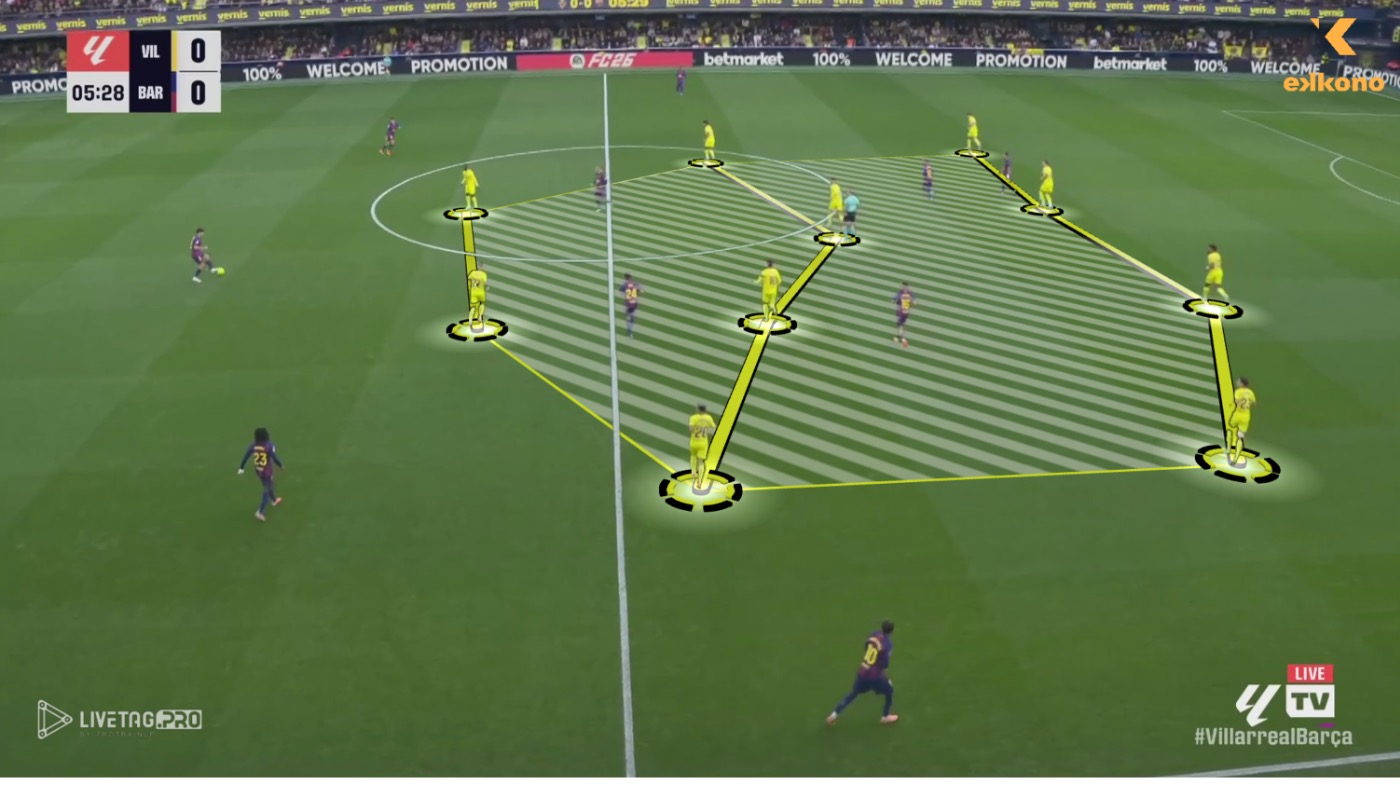
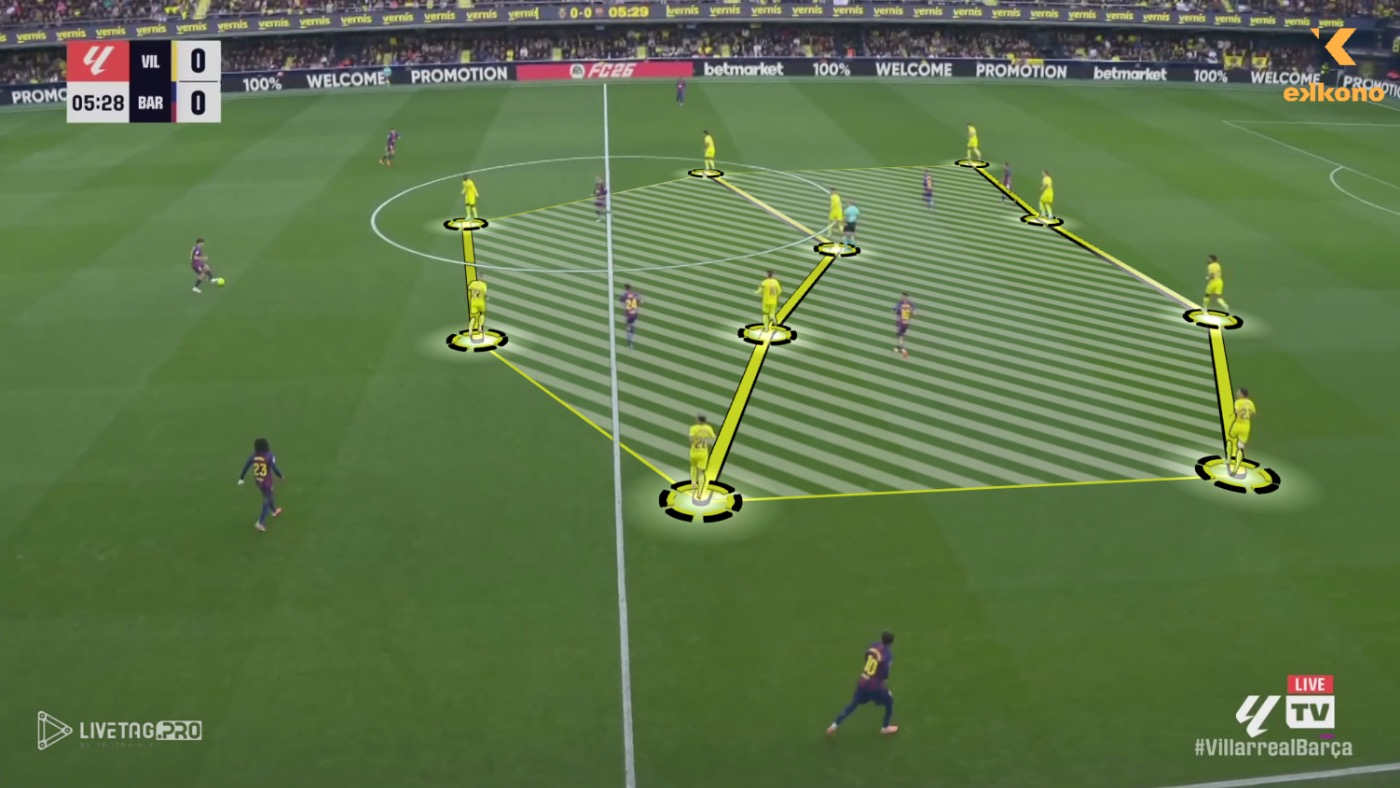
Marcelino builds his defensive phase around a compact and narrow block. The main objective is to close interior channels and deny the opponent space between the lines.
The distance between defensive and midfield lines usually stays between 15 and 20 meters. This compactness prevents the opponent from playing inside the block and forces them toward less dangerous areas.
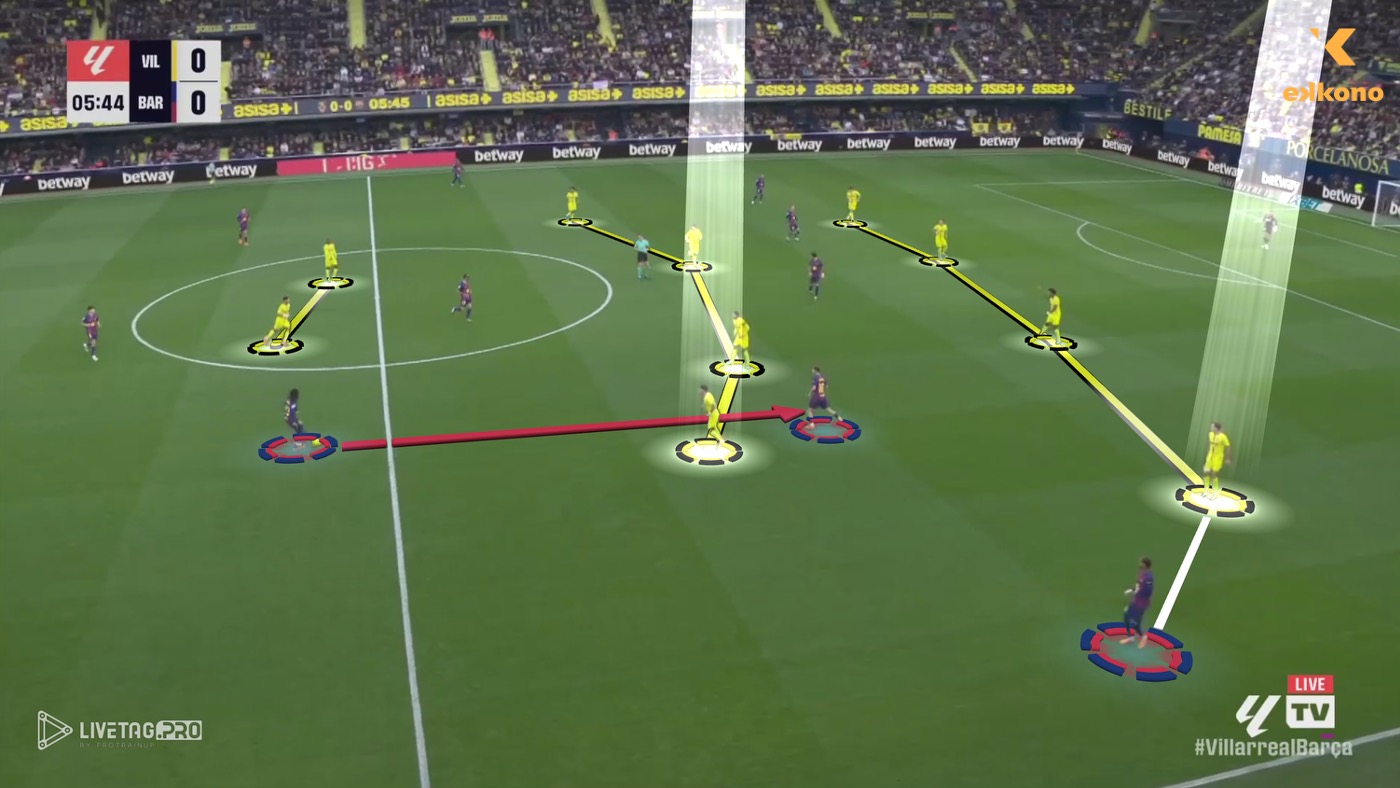
Wingers position themselves narrowly to block interior passing lanes. At the same time, this positioning allows passes toward the attacking fullback if he advances, or toward the winger if he holds width. Fullbacks remain slightly wider so they can step out quickly and press when the ball reaches the flank.
Marcelino 4-4-2 System
Villarreal’s compact and narrow 4-4-2 defensive block under Marcelino García Toral.
Marcelino 4-4-2 System
Moleiro (LW) blocks the passing lane into the defensive block, while the Cardona (RB) stays wider and is ready to press Lamine Yamal.
Collective Shifting When the Ball Is Played Wide
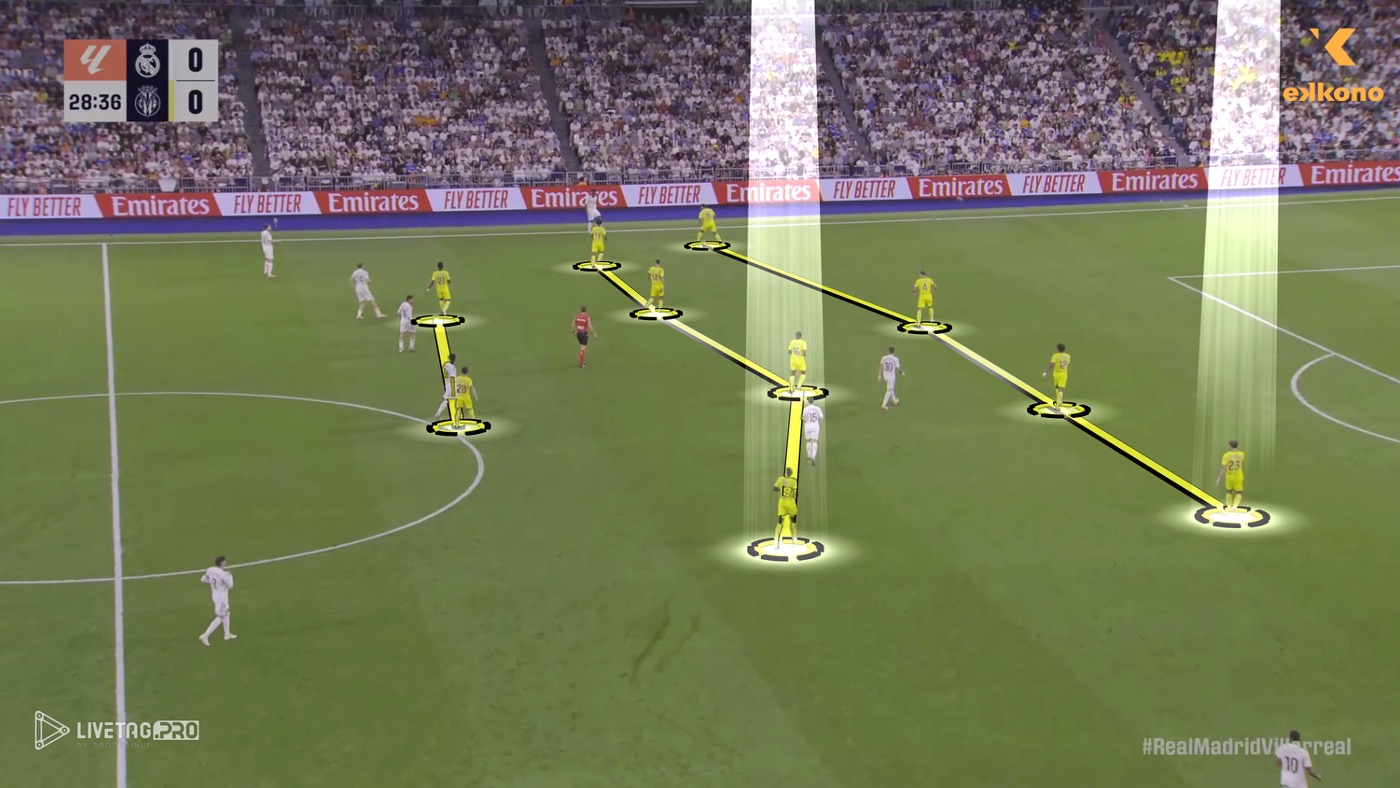
When the opponent plays the ball into a wide channel, Marcelino demands an immediate collective shift toward the ball side. The objective remains the same: protect the inside and deny penetration through central areas.
Both the defensive line and the midfield line take responsibility in these moments. They must stop progression along the ball-side corridor and control possible switches of play through midfield.
On the opposite side, the fullback and winger close their positions to maintain balance. If one player needs to step out and break the line, the rest of the unit shifts accordingly to provide cover and preserve stability.
Marcelino 4-4-2 System
When Real Madrid have possession on the left flank, Gueye (LW) and Cardona (RB) narrow their positions and stay balanced with the defensive block.
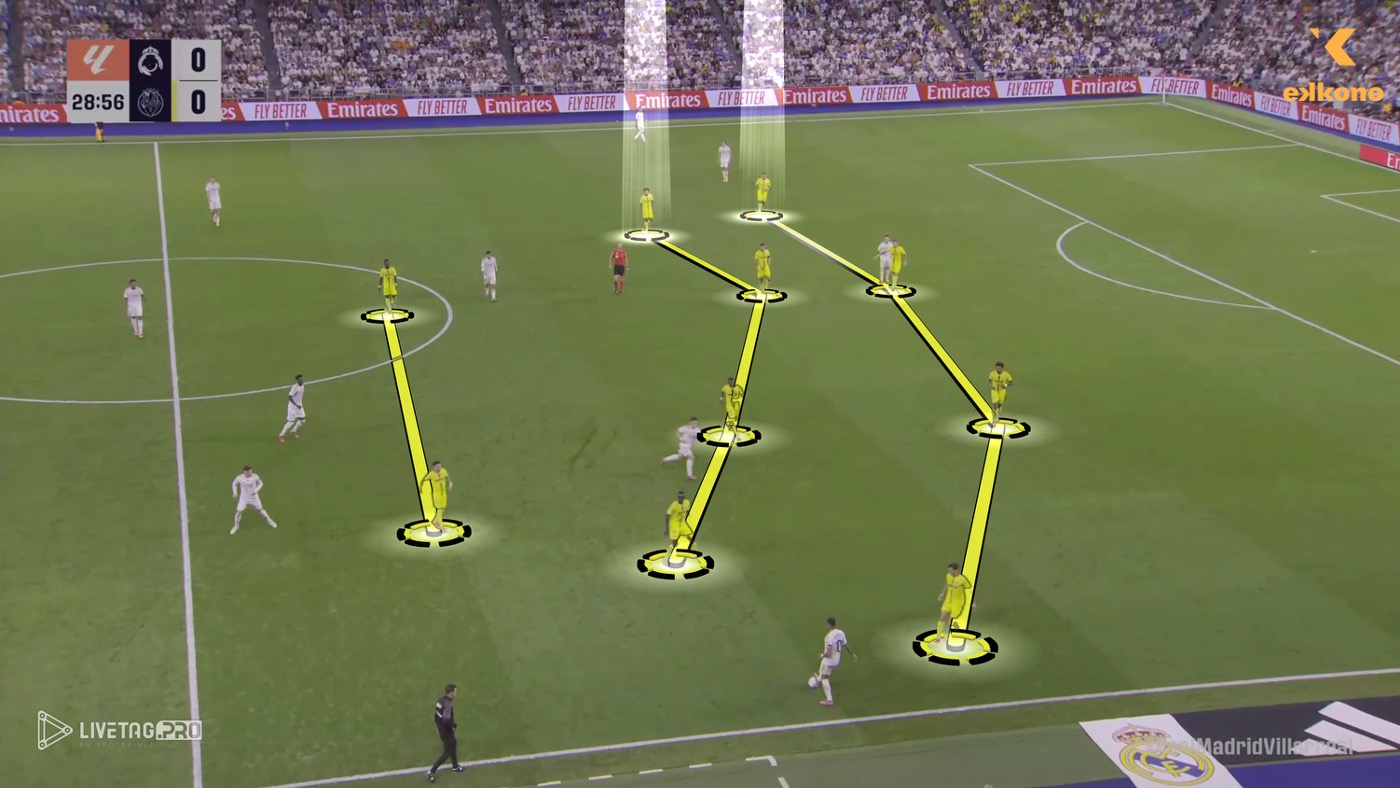
Marcelino 4-4-2 System
The same principle applies on the opposite side: when the ball is on the right attacking flank, Buchanan (RW) and Mourino (RB) shift across together with the defensive block.
The Strategic Role of the Second Striker in Defensive and Transition Phases
Many coaches ask the second striker to drop and close the opponent’s holding midfielder. This creates numerical equality in midfield and protects the central zone.
Marcelino chooses a different solution. He protects central areas through proactive movements from his midfielders. At the same time, he keeps the second striker positioned high and balanced in the forward line.
This approach gives the opponent more chances to switch play. However, Marcelino accepts this risk. He trusts his block to shift across, even if it means defending slightly deeper.
The main reason for this decision appears during offensive transitions. Many teams attack with the far-side fullback positioned high and only one midfielder providing balance. When possession is regained, this often creates a two-versus-one situation. The second striker and the far winger attack the opponent’s second center back.
If the opponent drops a fullback or a midfielder to protect the space, the situation becomes a two-versus-two. Even then, the offensive transition remains favorable for Marcelino’s team.
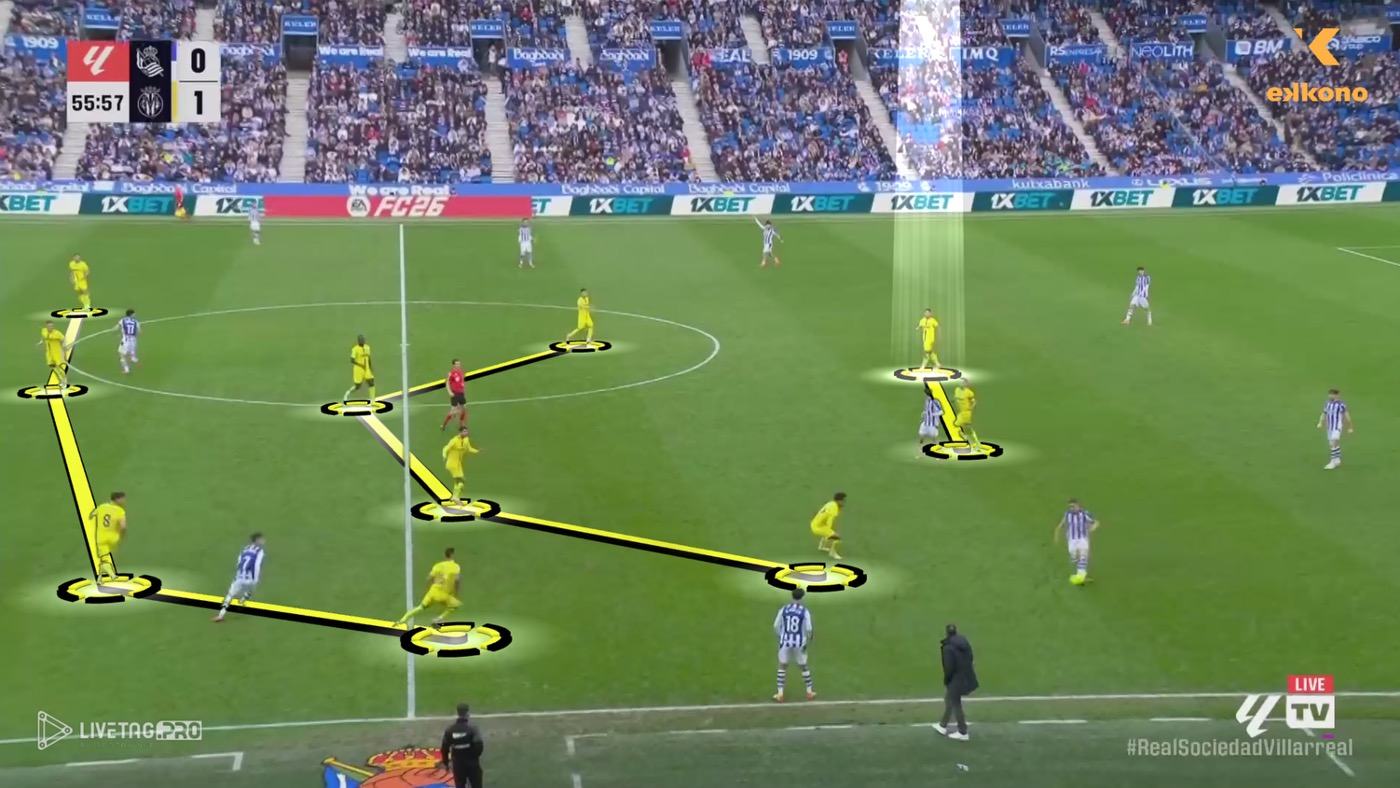
Marcelino 4-4-2 System
The second striker stays balanced on the same line as the first striker.
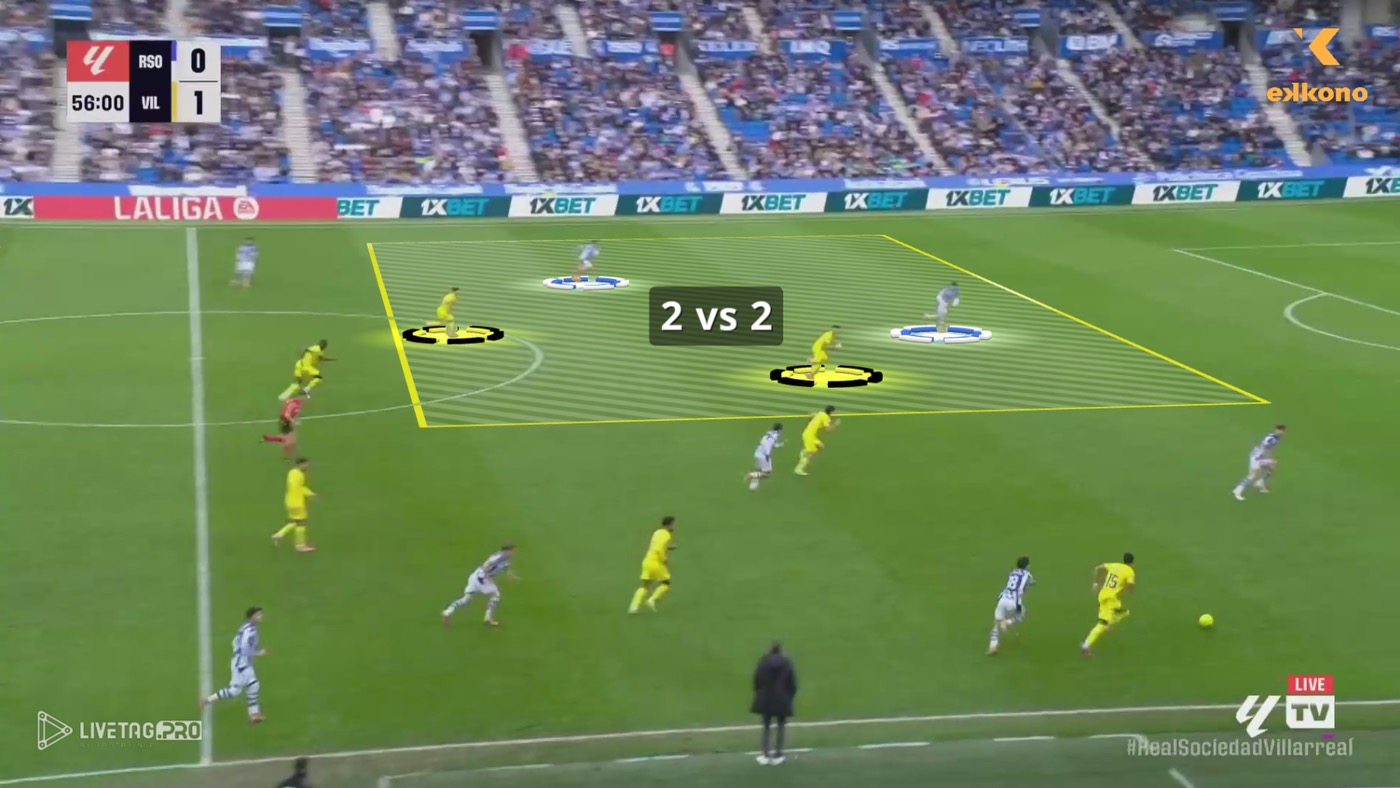
Marcelino 4-4-2 System
During the offensive transition, this allows the team to create numerical superiority or at least equality in the final third.
Conclusion
Marcelino García Toral’s 4-4-2 is a clear example of how a “classic” system can remain fully relevant at the highest level when it is supported by strong principles, precise roles, and collective discipline. For coaches, the key takeaway is not the structure itself, but the logic behind it: prioritising the protection of interior spaces, defending wide areas through collective behaviour, and keeping players in positions that allow immediate and effective offensive transitions.
Understanding these details helps transform the 4-4-2 from a simple formation into a powerful and modern game model.