
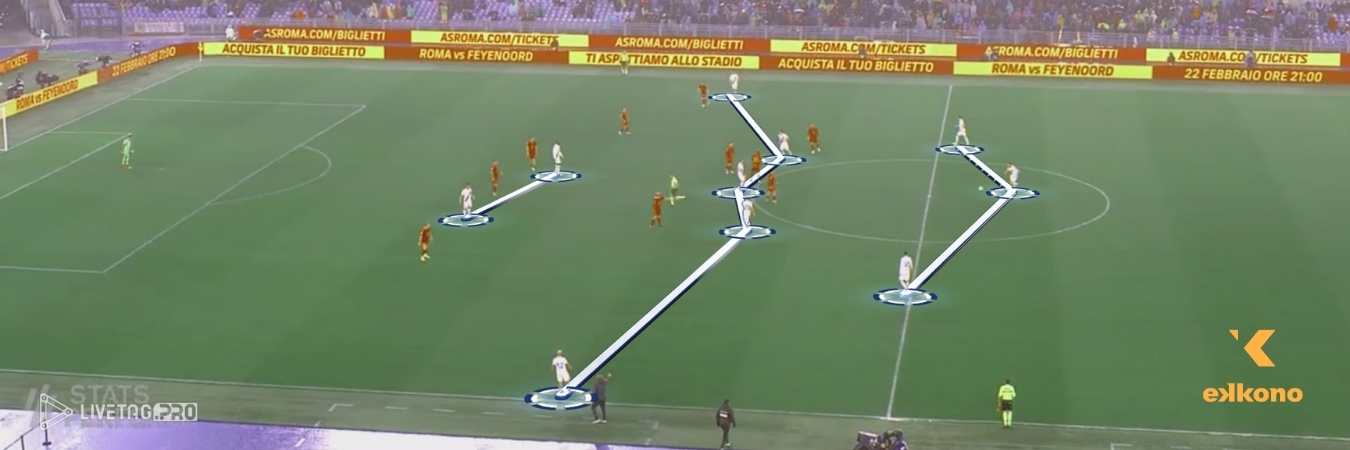
Introduction
The 3-5-2 has become one of the most influential structures in modern football. Many elite teams, from Antonio Conte’s Inter to Diego Simeone’s Atlético de Madrid, rely on it for a simple reason: it offers dominance in both boxes while maintaining stability in all phases.
The system combines three central defenders for a solid base, wing-backs for width, a compact midfield trio, and two strikers who constantly stretch the opposition. As a result, coaches gain a formation that blends control, verticality, and defensive security.
At Ekkono Coaches Academy, we analyse how this structure behaves, the game style it promotes, and the specific behaviours players must execute. This article is a preview of our webinar “3-5-2: Principles and Performance Solutions in Attack and Defense”, where each mechanism is explored in detail.
Game Style
The 3-5-2 is a structure that naturally invites dominance in the boxes. Offensively, it allows multiple players to arrive in the opponent’s area. Defensively, it fills your own box with numbers to protect against crosses or second balls.
Build-up
Its shape provides great stability in the build-up phase, thanks to the three center-backs and the possibility of building with numerical superiority inside. However, while it can adapt to different attacking styles, the 3-5-2 naturally lends itself to being direct. The presence of two strikers, three central midfielders, and dynamic wingbacks makes it ideal for quick vertical progressions and direct play after recovery.
Player Profiles
A more associative style is possible. However, it requires high mobility, strong perception skills, and precise timing between midfielders and forwards. Because these behaviours take time to develop, many teams begin with a direct version before transitioning to a more combinative model.
Defensive Behaviour
When defending, the 3-5-2 shows significant versatility. It is excellent for high pressing and individual duels. Yet, it becomes less effective in a medium block unless the team prevents switches of play. The limited width in midfield makes it harder to control fast changes of side. Therefore, most teams either press high or drop into a low block, rarely settling in an intermediate zone.
Offensive Transitions
The system becomes especially powerful in offensive transitions. After recovering the ball, the two strikers can immediately receive, stretch the defence, and generate doubt among the opponent’s centre-backs. This makes the 3-5-2 one of the most effective systems for direct counter-attacks.
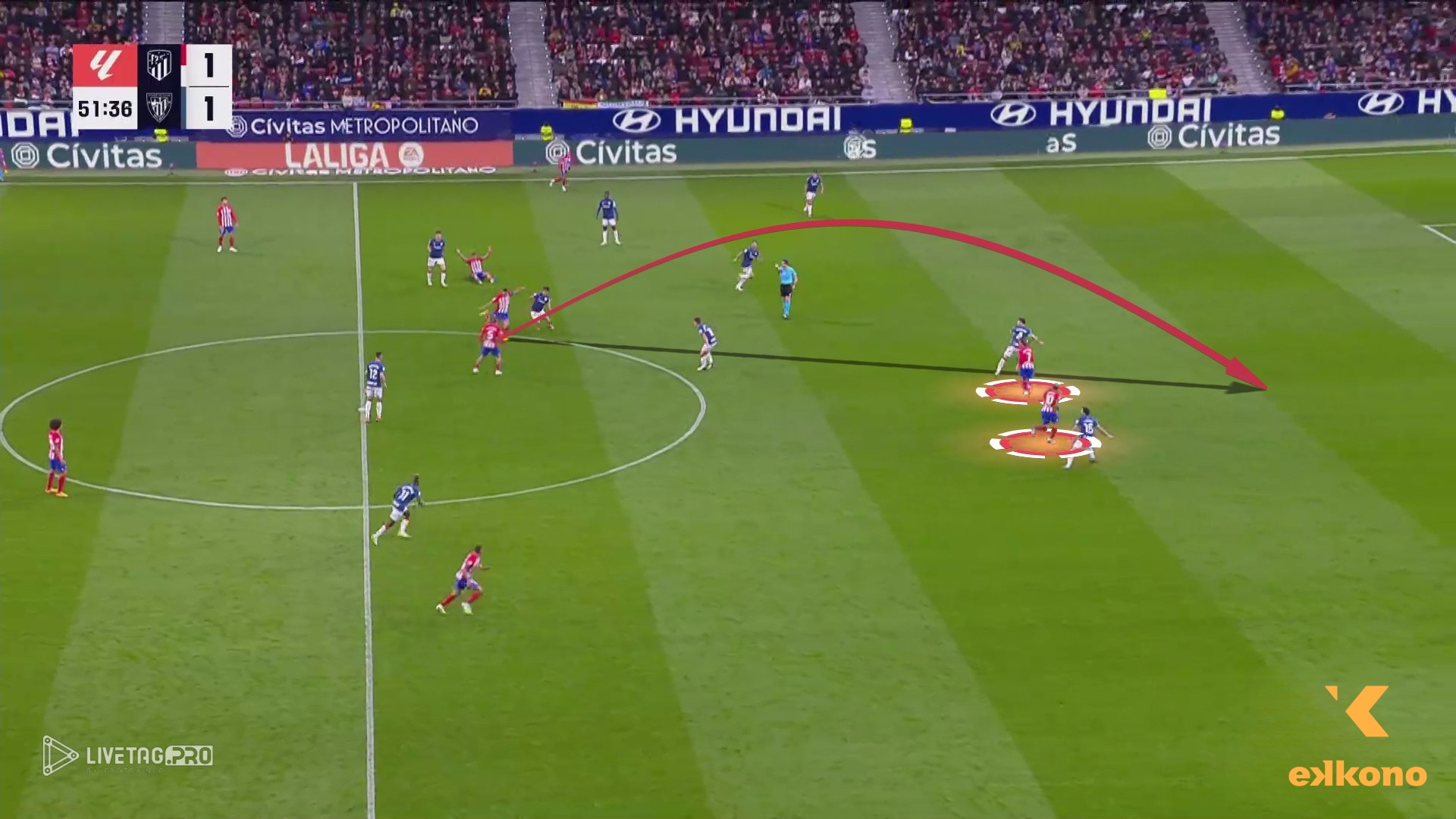
ATM Direct Play
Atlético de Madrid creating immediate danger after recovery through direct, vertical play.
Strengths
The first advantage is its structural stability. With three central defenders in the first line, the team can play out from the back securely, even under pressure. This gives confidence in possession and allows controlled progression into midfield.
The second is its capacity to overload the central corridor. The combination of three midfielders and two strikers who can drop inside gives the team clear superiority in the heart of the pitch. This central dominance enables both control and quick combinations.
Offensively, the 3-5-2 offers variety and presence in the box. The two forwards create confusion in defensive markings, forcing opposing center-backs to constantly make decisions about who to follow. Meanwhile, the wingbacks add depth and width at just the right moments, ensuring that the team can attack with five or even six players in the final third.
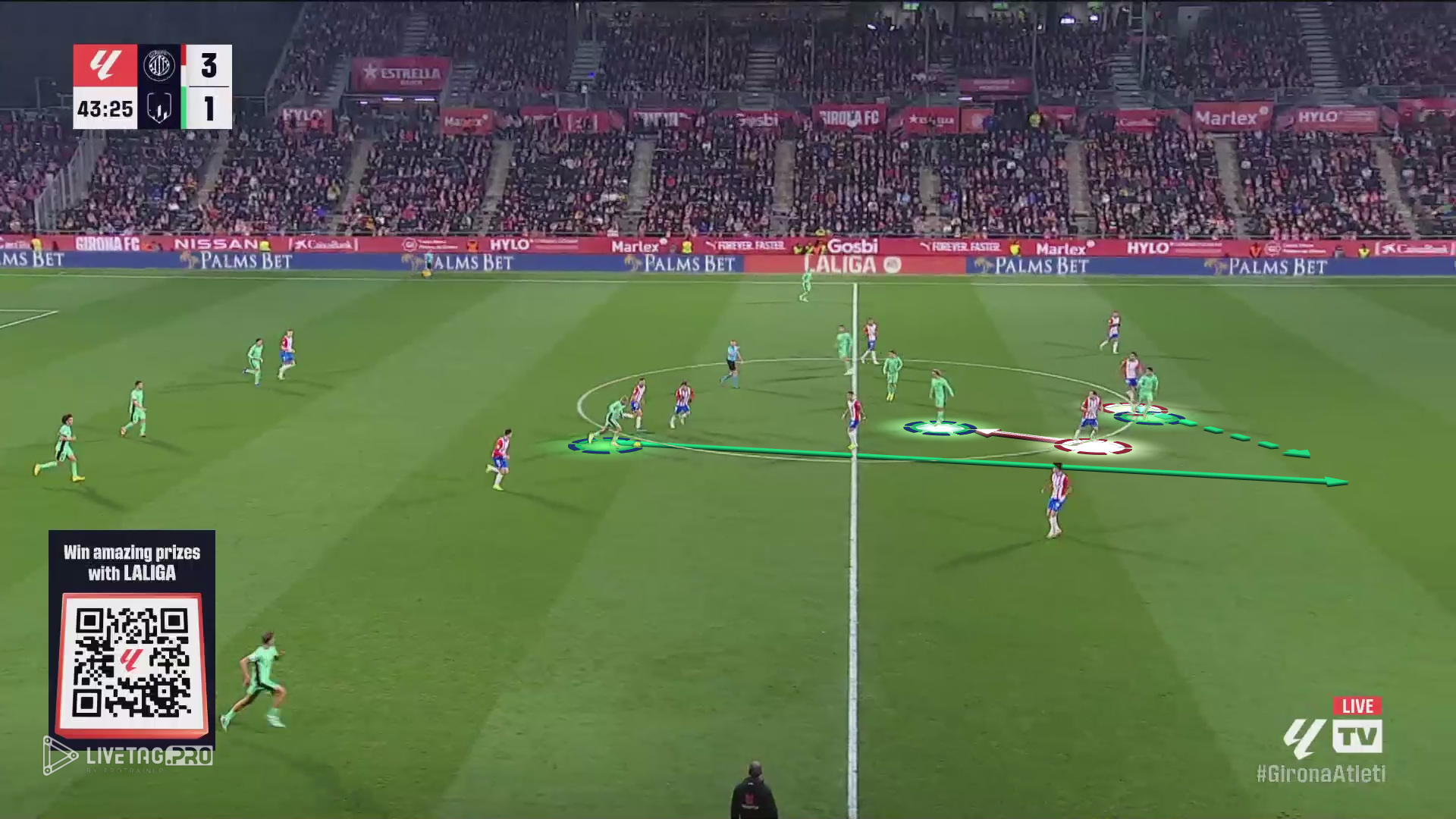
ATM. Advantage of using 2 strikers
Griezmann draws a center back out, opening a direct passing lane from De Paul to Morata.
Defensively, when the team drops, the structure often becomes a 5-3-2 or 5-4-1, providing solidity and compactness close to the goal. This allows a massive presence in defensive areas and makes it hard for the opponent to create clear chances through the middle.
“THE 3-5-2 FORMATION OFFERS THE PERFECT BALANCE BETWEEN CONTROL AND VERTICALITY—ALLOWING DOMINANCE IN BOTH BOXES.”
Weaknesses
The main challenge lies in the lack of defensive width. When the rival attacks with two wide players, the wingbacks are often forced to cover large spaces alone, which demands enormous physical and tactical effort. If the team is not aggressive and coordinated in its pressing, defending becomes difficult.
For a detailed breakdown on how opponents can exploit these wide areas, see our analysis: How to Attack a 1-5-3-2 Defensive Formation
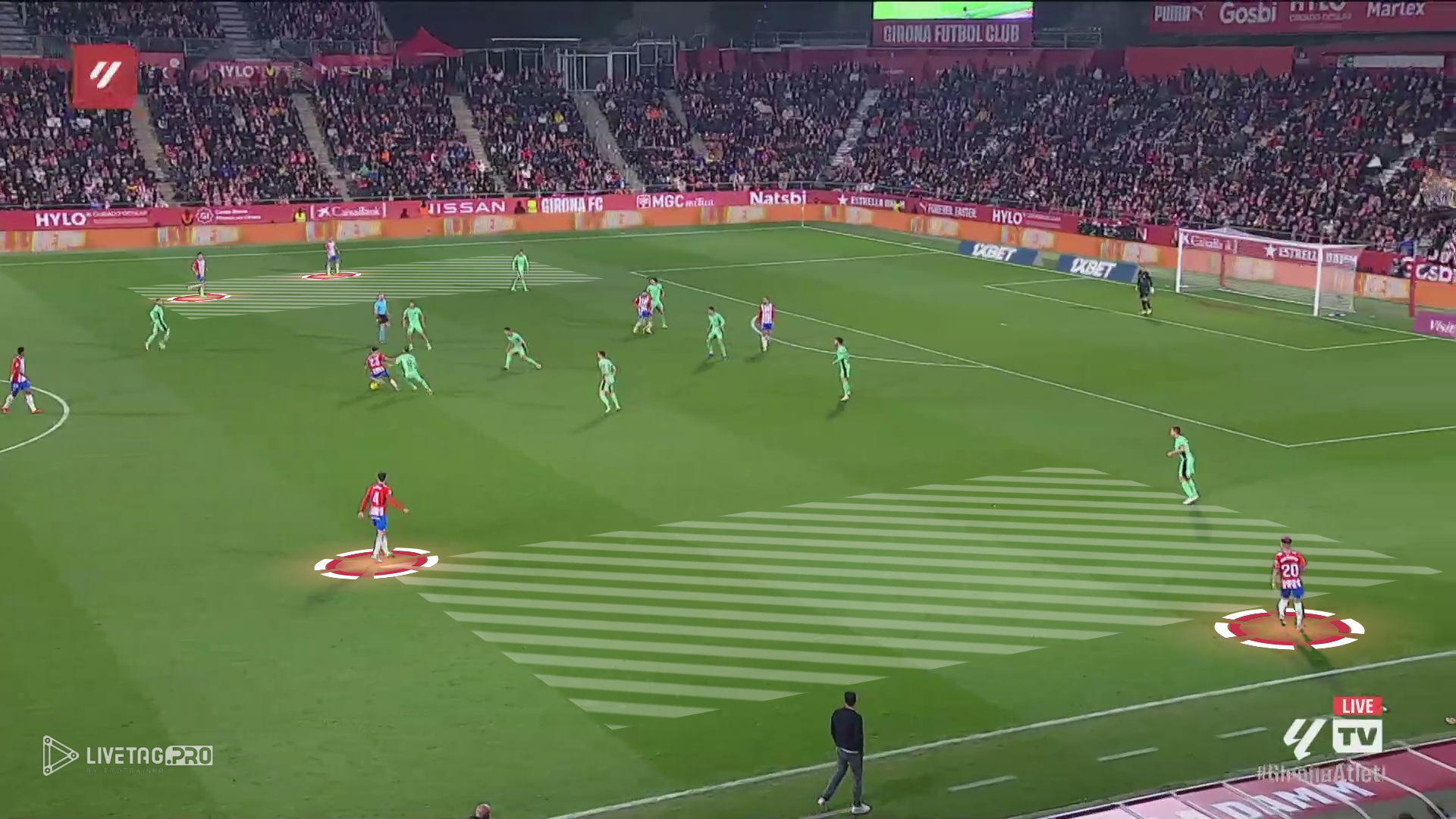
Disadvantage of 3-5-2. Numerical Inferiority.
Girona generating wide superiorities against Atlético in a 5-3-2 defensive structure.
Another weakness appears when defending in a medium block. Without sufficient amplitude in midfield, opponents can move the ball side to side and stretch the block. The system’s effectiveness relies heavily on the team’s ability to press high or retreat into a low block quickly; anything in between can expose gaps.
Finally, while the 3-5-2 provides many attacking options, it requires players who understand how to move and combine in reduced spaces. Without that mobility, possession can become static and predictable.
Conclusion
The 3-5-2 is a structure defined by balance, flexibility, and box dominance. It enables teams to press high or defend low, to progress through controlled build-up or attack directly—all while maintaining numbers in key zones of the pitch.
However, its success depends heavily on the intensity, coordination, and tactical understanding of the players involved. Mastering the 3-5-2 requires purposeful training and a clear methodology.
If you want to deepen your understanding and implement the 3-5-2 with clarity, precision, and performance impact, watch our webinar.